How Industrial Valves Deteriorate Over Time
Every operating cycle subjects a valve to mechanical stress. Stems move, sealing surfaces make contact, packing compresses and internal components experience friction. Frequent opening and closing can gradually wear seats, discs, balls, plugs and stem threads. Even a valve that appears sound externally may develop internal wear that prevents it from closing completely or controlling flow accurately.
The material passing through the valve also affects its condition. Abrasive particles can erode internal surfaces, while corrosive liquids and gases may attack the body, trim or fasteners. Where the process fluid is chemically aggressive, an unsuitable material specification can accelerate deterioration considerably. Localised corrosion is particularly concerning because substantial damage can develop beneath deposits, coatings or insulation without producing obvious external warning signs.
Temperature and pressure changes create further challenges. Repeated heating and cooling cause components to expand and contract, potentially affecting clearances, alignment and sealing performance. Pressure fluctuations, vibration and flow-induced forces can loosen connections or contribute to fatigue. Cavitation may also damage internal surfaces when vapour bubbles form and collapse in areas of rapidly changing pressure.
Environmental conditions matter as well. Valves installed outdoors may be exposed to rain, moisture, salt, dirt and temperature extremes, while valves in industrial buildings can be affected by chemicals or airborne contaminants. Poor lubrication, long periods without operation and incorrect handling can compound these problems. Understanding all relevant deterioration mechanisms is essential before refurbishment or replacement is considered.
Common Signs That a Valve Needs Attention
External leakage is one of the clearest signs of a valve problem. Fluid may escape around the stem, gland, bonnet joint, flange or threaded connection. Even a small leak should be investigated because it can indicate worn packing, damaged seals, loose fasteners, corrosion or excessive system stress. The seriousness of the leak also depends on the temperature, pressure and hazardous properties of the process medium.
Internal leakage is less visible but can be equally important. A closed valve that allows fluid to pass may have worn seats, a damaged closure element, trapped debris or poor alignment. Operators may detect this through unexpected downstream pressure, temperature changes or difficulty isolating equipment. In applications where dependable isolation is safety-critical, an inability to achieve the required shut-off standard demands prompt assessment.
Changes in operation provide another warning. A valve may become unusually stiff, require excessive torque or fail to travel through its complete operating range. Handwheels, gearboxes and actuators may feel rough, inconsistent or unresponsive. These symptoms can result from corrosion, bent stems, seized bearings, damaged threads, inadequate lubrication or an obstruction inside the body.
Unusual vibration, noise or unstable process control can also point to valve deterioration. Chattering, whistling or repeated actuator movement may indicate cavitation, excessive velocity, incorrect sizing or worn control components. Maintenance teams should compare these observations with previous inspection records and operating data. A developing pattern is often more informative than a single isolated symptom.
What Does Valve Refurbishment Involve?
Refurbishment begins with safe removal or isolation of the valve, followed by an initial condition assessment. The system must be shut down, depressurised and made safe before work begins. The Health and Safety Executive advises isolating pipelines containing pressurised or hazardous substances, locking off isolating valves where necessary and releasing stored energy before maintenance is undertaken.
Once removed, the valve is normally cleaned and dismantled so that internal components can be examined. The body, bonnet, stem, seats, seals, closure element, fasteners and operating mechanism are checked for wear, cracking, corrosion, distortion and material loss. Accurate measurements may be taken to compare critical dimensions with manufacturer tolerances or an approved engineering specification.
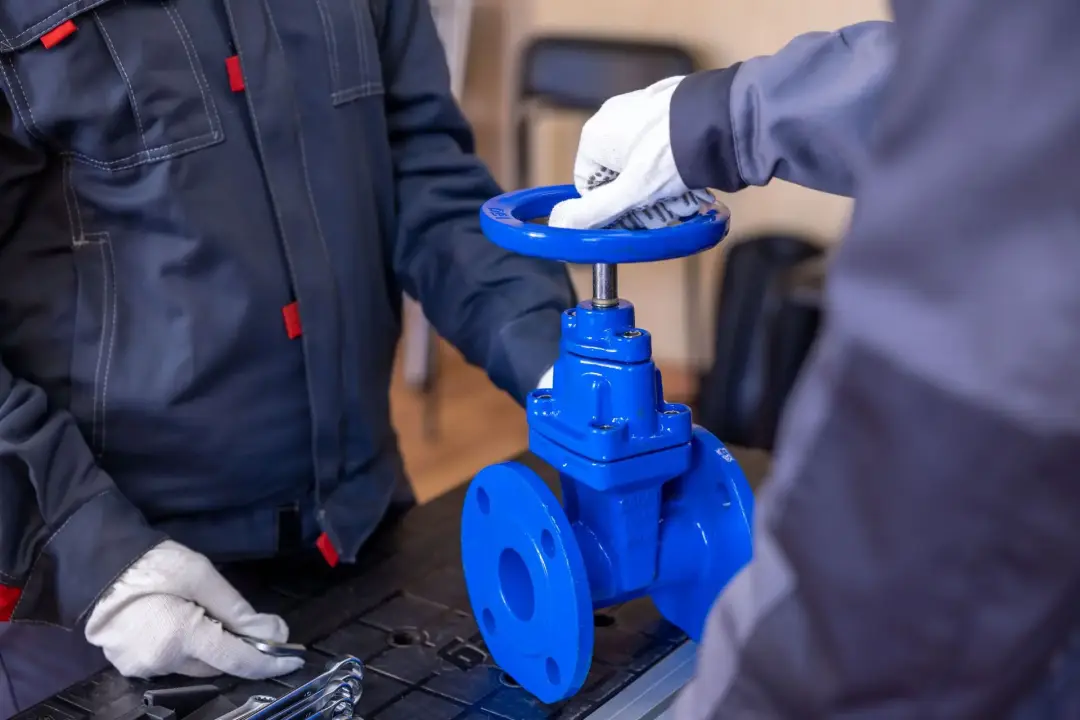
Serviceable components can then be cleaned, repaired or reconditioned. Depending on the valve design, the work may include replacing packing and gaskets, renewing bearings, machining or lapping seating surfaces, repairing stems and restoring protective coatings. Components that cannot be returned to an acceptable condition must be replaced with parts of the correct material, dimensions and pressure-temperature rating.
After reassembly, the valve must be tested against the applicable acceptance criteria. Testing may assess shell integrity, seat leakage, operability and actuator performance. Results should be recorded so the business has evidence of the valve’s condition and the work completed. Proper refurbishment is therefore a controlled engineering process rather than a cosmetic clean and repaint.
When Is Refurbishment the Best Option?
Refurbishment is often attractive when the valve body remains structurally sound and deterioration is limited to replaceable or repairable components. Worn packing, gaskets, seats, seals, bearings and stem components may be restored at a lower cost than purchasing an equivalent new valve. This is particularly relevant for large, specialist or high-specification units.
Older valves may also be suitable candidates when they are manufactured from high-quality castings or alloys that remain in good condition. A well-built valve body can sometimes provide many additional years of service after its internal parts have been renewed. The decision must nevertheless be supported by inspection and testing rather than assumptions based on the valve’s original quality.
Refurbishment can solve availability problems where a replacement has a long manufacturing lead time or the existing valve has unusual dimensions. Restoring the original unit may avoid pipework modifications, new supports or changes to adjacent equipment. Retaining the existing face-to-face dimensions can make reinstallation easier and reduce the scope of shutdown work.
The proposed service conditions must remain within the valve’s original or professionally reassessed capabilities. Refurbishment is not a way to make an unsuitable valve fit a more demanding duty. If pressure, temperature, fluid composition or required performance has changed, a competent engineer should determine whether the existing design is still appropriate before work proceeds.
When Should an Industrial Valve Be Replaced?
Replacement is generally necessary when the pressure-containing body has suffered serious cracking, extensive corrosion, excessive wall loss or irreversible distortion. Repairs to pressure boundaries require specialist procedures and may not always be technically permissible or commercially sensible. Where structural integrity cannot be demonstrated with sufficient confidence, installing a suitable new valve is the safer choice.
A valve should also be replaced when essential parts are unavailable or cannot be manufactured and verified economically. Obsolete designs may have unusual seals, trim arrangements or actuator interfaces that make reliable refurbishment difficult. Repeatedly adapting incompatible components can introduce uncertainty into an assembly that depends on precise tolerances and material compatibility.
Changes to the process may make the original valve unsuitable. Increased pressure, higher temperature, more corrosive media or a different flow-control requirement can exceed its design capabilities. In these circumstances, restoring the valve to its previous condition would not address the underlying mismatch. A replacement can be selected specifically for the revised duty and operating environment.
A history of recurring failures is another strong reason to investigate replacement. Repeated packing leaks, seat damage or actuator faults may indicate incorrect sizing, unsuitable materials or excessive system loads. Instead of continuing to repair the symptoms, the business can use failure data to specify a valve that resolves the root cause and delivers more dependable long-term performance.
Comparing the Costs of Refurbishment and Replacement
The initial quotation provides only part of the financial picture. Refurbishment costs can include removal, transport, cleaning, dismantling, inspection, replacement parts, machining, testing and reinstallation. Replacement costs may involve the purchase price, delivery, new flanges, actuators, controls, pipework alterations and commissioning. Both options should be compared on an equivalent scope.
Shutdown duration can be more expensive than the valve itself. A seemingly low-cost repair may create significant production losses if parts are discovered to be unavailable after dismantling. Conversely, waiting for a made-to-order replacement could extend a planned outage. Obtaining realistic lead times and contingency plans helps the business evaluate the true operational cost.
Expected service life must also be considered. A professionally refurbished valve with a sound body may provide strong value if it can deliver several more years of reliable operation. Refurbishment becomes less economical when other ageing components are likely to fail soon afterwards. Replacement may have a higher upfront cost but a lower annualised cost over its working life.
The comparison should include risk as well as expenditure. Potential leakage, unplanned shutdowns, environmental harm and harm to personnel carry consequences that cannot be reduced to the purchase price alone. A lifecycle assessment considers acquisition, maintenance, energy use, downtime, inspection and disposal, producing a more meaningful basis for the decision.
How Valve Condition Affects Safety and Efficiency
Valve condition directly influences a system’s ability to control and isolate process media. A leaking isolation valve can prevent maintenance teams from establishing a safe working area, while a faulty control valve may allow pressure, temperature or flow to move outside the intended operating range. The importance of the defect depends on the valve’s function within the wider system.
Safety and relief valves require particular attention because they protect equipment against dangerous overpressure. A device that is stuck, incorrectly set or unable to discharge properly may leave the system without effective protection. Repeated discharge can also indicate a problem with the device or process and should be investigated as part of planned maintenance.
Poor valve performance can reduce efficiency without causing an immediate failure. Internal leakage may waste compressed air, steam, water or process product. A control valve operating outside its effective range can create unstable flow and force pumps or compressors to work harder. Packing that is tightened excessively may increase friction and place unnecessary strain on the stem or actuator.
Restoring the valve can therefore improve more than leak tightness. Correct seating, smooth stem movement and accurate actuator response help the process operate closer to its intended design. Monitoring energy consumption, pressure loss and control stability before and after maintenance can demonstrate the wider operational value of a successful intervention.
The Importance of Professional Valve Testing
Visual inspection alone cannot confirm that a refurbished valve will perform correctly in service. Pressure testing can help identify leakage through the body, bonnet joint or other pressure-containing parts. Seat testing assesses whether the closed valve limits internal leakage to the level required for its design and application.
The test medium, pressure, duration and acceptance criteria must be appropriate for the valve and governing specification. Testing at an unsuitable pressure can damage the assembly or create a serious hazard. The equipment, restraints and test area must also be set up so that personnel are protected from stored energy and any sudden release of the test medium.
Functional testing checks how the complete assembly operates. Technicians may verify travel, torque, limit switches, position feedback, solenoids and fail-safe action where an actuator is fitted. For control valves, the assessment may include calibration and response across the intended operating range. This confirms that individual repaired parts work together as a system.
Documentation is an essential part of testing. A useful record identifies the valve, test procedure, instruments, calibration status, results, acceptance criteria and person responsible. Where the valve forms part of a qualifying pressure system, the business must also consider the written scheme of examination and competent-person requirements under the Pressure Systems Safety Regulations 2000.
Minimising Operational Downtime During Valve Maintenance
Effective outage planning starts before the valve is removed. Maintenance teams should confirm its identity, location, dimensions, materials, duty and isolation requirements. Reviewing drawings, photographs, service records and previous test results reduces uncertainty. Spare gaskets, fasteners and likely replacement parts can then be obtained before the shutdown begins.
The refurbishment provider should receive accurate information about the process medium and known defects. This allows appropriate cleaning, handling and inspection arrangements to be prepared. If hazardous residues may remain, responsibilities for decontamination and certification must be agreed clearly. Surprises discovered after delivery can delay the work and expose personnel to avoidable risk.
Contingency planning is equally important. A standby valve, temporary bypass or pre-approved replacement may be required if inspection reveals that refurbishment is impossible. Decision limits should be established in advance, including the maximum acceptable repair cost and the defects that will trigger replacement. This prevents valuable shutdown time being lost while authorisation is sought.
Reinstallation should be planned with the same care as removal. Flange condition, alignment, gasket selection, bolting, actuator connections and access for commissioning all affect the schedule. Once installed, the valve should be checked under controlled operating conditions. A structured handover ensures that test certificates, repair records and future maintenance recommendations reach the responsible team.
Making the Right Decision for Your Valve System
The decision should begin with the valve’s role. A small utility valve may justify a different approach from a large isolation valve controlling hazardous material. Criticality analysis considers the consequences of failure, availability of backup equipment and effect on production. More critical applications generally require stronger evidence before a refurbished unit is returned to service.
Condition information should then be gathered from inspections, operating data and maintenance history. The assessment should distinguish a localised, repairable defect from damage that affects the valve’s basic integrity or suitability. A competent specialist can identify probable failure mechanisms and explain whether refurbishment will correct them or merely postpone replacement.
Technical suitability, total cost, availability and future plans should be evaluated together. Refurbishment may be ideal for a sound specialist valve in an unchanged process, while replacement may be preferable where duties have evolved or failures are recurring. The cheapest immediate option is not necessarily the most economical or responsible choice.
Whichever route is selected, the reasoning should be documented. Records should include the inspection findings, risk considerations, work completed, test results and recommended maintenance interval. Anderson Engineering and Welding Services can assist with valve inspection, refurbishment and testing, helping businesses reach a decision based on evidence rather than guesswork.