Mobile welding allows welding work to be done directly at a site. It's useful for repairing, joining or altering metalwork that's difficult to move. This article explains what mobile welding is, where it's used and when it may be suitable.
What Is Mobile Welding?
Mobile welding is often more suitable than workshop welding when metalwork cannot be easily removed, transported or taken to a workshop. Instead of moving the item, a qualified welder will travel to your site with the equipment they need to complete the work, and in the UK, mobile welding is commonly used on construction sites, industrial premises, farms, commercial properties and residential projects.
This type of welding can be useful for repairing structural steel, gates, railings, fencing, machinery, frames and other fixed metal components, and it's ideal when a repair service is needed quickly. It can also be useful during building projects if steel sections need to be joined, altered or repaired after they have been positioned on site.
If you would like to learn more about when you need to hire a mobile welder, check out our article here: When Do I Need To Hire A Mobile Welder
What Equipment Is Used for Mobile Welding?
Mobile welding requires professionals to have access to equipment that can be safely transported and used at different sites. The exact equipment that's needed depends on the type of welding being done, the metal being worked on and the location's conditions. A mobile welder will usually have a suitable welding machine, leads, clamps and welding rods or wire, and depending on the job, this equipment may be used for processes such as MIG, TIG or stick welding.
Portable generators can also be used if a reliable power supply is not available. Gas cylinders can be needed for some welding processes, and these must be stored, transported and handled correctly since they contain pressurised gases. Cutting and grinding tools are also commonly used to prepare metal surfaces, remove damaged sections and create clean joints before the welding begins.
Personal protective equipment is essential, and this normally includes a welding helmet, gloves, protective clothing and suitable footwear. Screens or barriers may also be needed to protect people nearby from sparks and bright welding light, and other useful equipment to have on hand are measuring tools, clamps, extension leads, fire extinguishers and ventilation equipment.
What Types of Welding Can Be Carried Out On Site?
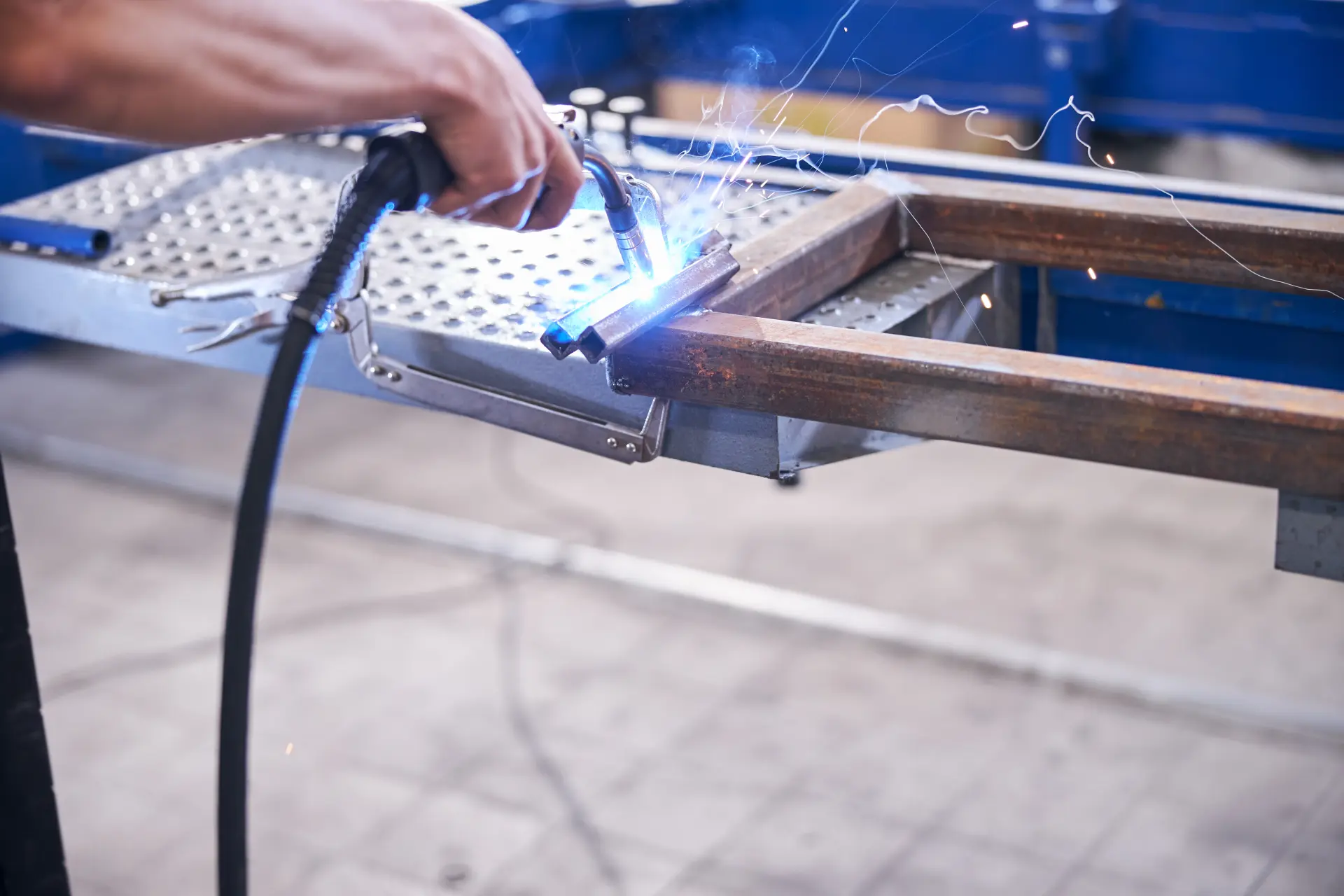
Mobile welding can cover many types of repair, alteration and installation work directly at a property, construction site or industrial location. The main types of on-site work include welding structural steel, repairing gates and railings, fixing damaged frames, joining steel sections and carrying out repairs to machinery or equipment. Processes such as MIG, TIG and stick welding can also be done on site as long as the equipment, materials and working conditions are suitable.
Mobile welding is particularly useful for items that are fixed in place or difficult to transport, such as steel beams, columns, brackets, handrails, fencing and industrial pipework. Workshop welding is generally better for detailed fabrication work that needs controlled conditions, whereas on-site welding is better for installation and repair work.
When Is Mobile Welding More Suitable Than Workshop Welding?
Mobile welding is generally more suitable than workshop welding when the metalwork cannot be removed, transported or taken to a workshop easily. Mobile welding allows the welder to travel to the site and carry out the work where the structure or equipment is already located, which is ideal for fixed steelwork.
For example, structural beams, columns, railings, gates, fencing and metal frames may need to be repaired or altered in place, and removing these items could be difficult, expensive or unnecessary. Mobile welding is ideal for making these repairs without the hassle of transporting the metalwork back and forth from the workshop.
On the other hand, workshop welding is generally more suitable for complex fabrication work that needs controlled conditions, large machinery or detailed preparation.
Can Mobile Welding Be Used for Structural Steel Repairs?
Mobile welding can be used for some structural steel repairs in the UK, as long as the work is suitable for on-site welding and the correct safety and engineering requirements are followed. Mobile welding is often done when damaged steelwork, like steel beams, columns, brackets, frames, platforms and supports, cannot be easily removed and taken to a workshop.
Mobile welding can also be used to repair cracked welds, replace damaged steel or strengthen an existing connection as part of a repair service. Before any structural repair begins, the cause and extent of the damage should be properly assessed to check for issues like corrosion, excessive loading, failed connections or poor previous repairs.
Mobile welding can be particularly useful on construction sites, commercial buildings, industrial premises and other locations with fixed steel structures. However, some repairs are better off being done in a workshop if controlled conditions, specialist machinery or extensive fabrication is needed.
How Is Mobile Welding Used on Construction Sites?
Mobile welding is generally done on construction sites to help join, repair and alter metal components without moving them to a workshop. It's particularly useful for structural steel beams, columns, brackets, frames and supports since they have already been delivered, positioned and installed. Mobile welders can also repair damaged connections, add strengthening plates or make small adjustments to the steelwork.
On-site welding can also be used for staircases, handrails, platforms, gates, fencing and other metalwork that's been installed during a building project. In some cases, mobile welding is done to connect steel sections that are too large or difficult to transport once they are fully assembled.
However, before the welding starts, the work area must be checked for risks such as flammable materials, restricted access and nearby workers, and suitable protective equipment, screens and fire safety measures must be used.
What Are the Benefits of Mobile Welding?
Mobile welding is a practical way to complete welding work directly at a construction site, business premises or other location. One of its main benefits is that large, heavy or fixed metalwork doesn't need to be removed or transported to a workshop, which can be useful for structural steel, gates, railings, fencing, machinery frames or other metal components that are difficult to move.
Completing the work on site can also reduce your transport needs and help you complete repair work or alterations during a construction project. A mobile welder can work on steel beams, brackets, supports and other components that have already been installed, and these services can be done at construction sites, industrial premises, commercial properties, farms and residential locations, as long as the site is suitable for safe welding work.
Can Mobile Welding Be Used for Emergency Repair Work?
Mobile welding can be used for some emergency repair work in the UK when damaged metalwork needs to be repaired on site. Emergency mobile welding can be used for damaged gates, railings, fences, steel frames, brackets, machinery supports and some structural steel components, such as a broken metal gate.
Mobile welders can also repair damaged supports, platforms, frames or equipment on construction and industrial sites, as long as it's safe to do so. Before any emergency repair begins, the damaged area needs to be assessed to check whether welding is the correct repair method. If any structural steel has been badly damaged, a structural engineer may need to inspect it and specify the repair method.
At Anderson Engineering And Welding Services, we provide mobile welding services for construction sites, commercial properties, industrial premises and domestic locations all across Manchester and the surrounding areas.